

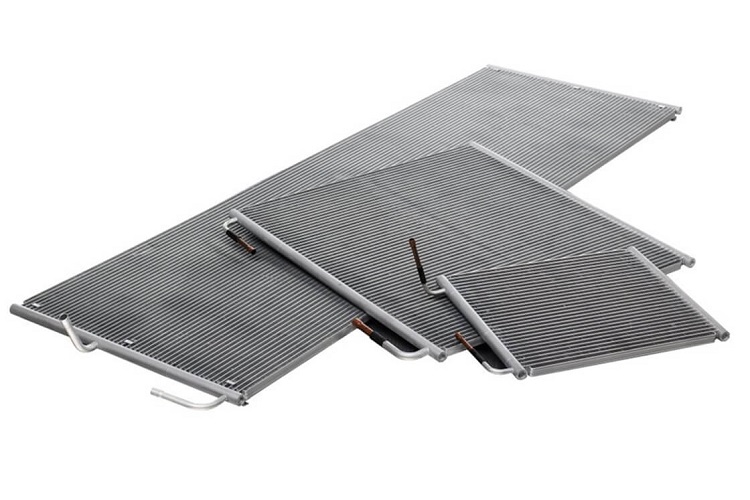
Aluminum microchannel heat exchangers are a top choice in HVAC and refrigeration systems due to their excellent thermal performance and light weight design. Among their advantages, however, is their strength for long periods of time in extreme operating conditions. This article discusses the factors that make aluminum microchannel coils robust and how they hold up in real-world applications.
Why Aluminum Excels in Microchannel Heat Exchangers
1. Natural Corrosion Resistance
The inherent nature of aluminum makes it the optimal material for heat exchanger applications:
Formation of an Oxide Layer: In contact with air, aluminum forms a self-protecting oxide layer that is resistant to further corrosion
Resistance to Salt Spray: Performs superior to copper in salt-laden environments close to the ocean
pH Tolerance: Demonstrates integrity in a broad range of operating conditions
2. Structural Integrity Under Stress
Designs using today’s advanced aluminum alloys offer:
High Strength-to-Weight Ratio: Resists vibration and mechanical stress better than traditional materials
Fatigue Resistance: Maintains performance under repeated thermal cycling
Impact Resistance: Less susceptible to damage when being handled and installed
3. Long-Term Performance Characteristics
Field experience with aluminum microchannel heat exchangers demonstrates:
15+ Year Lifespan in well-maintained systems
Long-term Minimal Performance Degradation compared to copper-aluminum designs
Consistent Heat Transfer Rates throughout entire service life
Factors Affecting Microchannel Coil Longevity
Environmental Considerations
Operating environment significantly affects durability:
- Coastal Applications: Require additional protective coatings for salt resistance
- Industrial Applications: May need special chemical-resistant alloys
- High Humidity Areas: Require hydrophobic coatings to prevent retaining moisture
Maintenance Requirements
Proper care extends service life:
- Routine Cleaning: Preserves airflow free and at maximum efficiency
- Annual Inspection: Finds early warning signs of corrosion or damage
- Correct Chemical Treatments: Use only approved cleaners to avoid aluminum deterioration
Installation Best Practices
Proper installation prevents premature failure:
- Secure Mounting: Reduces vibration-induced stress
- Correct Refrigerant Charge: Shields the system against acid buildup
- Proper Airflow Management: Shields the system from non-uniform thermal stresses
- Case Study: Trane Microchannel Coil Performance
The Trane microchannel coil demonstrates aluminum’s long-term durability advantages:
- Proprietary Alloy Composition: Created for maximum corrosion protection
- Accelerated Life Testing: Demonstrated through rigorous extreme salt spray and thermal cycling testing
- Field Performance Data: Shows less than 5% efficiency loss after 10 years of operation
- These coils demonstrate how cutting-edge aluminum microchannel technology delivers:
Lower Maintenance Costs compared to traditional coil designs
Reduced Replacement Interval in commercial HVAC use
Reliable Performance under changing weather conditions
Comparison of Aluminum with Traditional Materials
Over Copper-Tube Coils
Aluminum microchannel designs offer:
- 30-50% Weight Savings for easier handling
- Enhanced Corrosion Resistance in most environments
- Increased Thermal Efficiency per unit volume
Over Stainless Steel
Stainless steel finds applications, but aluminum offers:
Improved Heat Transfer Performance
Lower Material Cost
Easier Manufacturability for complex geometries
Building upon Aluminum’s Natural Resilience
Protective Coatings
New microchannel coils typically have:
- Electrophoretic Coatings (E-Coat): Provides uniform corrosion protection
- Hydrophilic Coatings: Improves water drainage and reduces fouling
- Polymer Films: Provides added protection against abrasive conditions
Design Innovations
Manufacturers improve durability by:
- Louvered Fin Designs: Minimizes dirt accumulation
- Reinforced Headers: Minimizes stress points
- Optimized Channel Geometry: Eliminates refrigerant maldistribution
Real-World Performance Data
Industry studies indicate:
- 85% of aluminum microchannel coils exhibit no appreciable corrosion after 8 years
- Failure rates are 60% lower compared to similar copper-tube designs
- Energy efficiency stays within 3% of original specifications after ten years
Conclusion
Aluminum microchannel heat exchangers are a robust, efficient option for new HVAC and refrigeration equipment. Their natural corrosion resistance, strength, and ten-year reliability make them an ideal option for residential and commercial use. Applications such as the Trane microchannel coil show how engineering advancements can optimize the natural strengths of aluminum.
With proper selection, installation, and maintenance, aluminum microchannel heat exchangers can provide decades of trouble-free operation at optimum efficiency. As we keep making progress in the field of material science, we can look forward to further improvements in the performance and life of such key components.